As the Matriarchs of our community – Thank you for all you do.
In honour of Mother’s Day I have borrowed an article written by Lorraine Freeman about Louis Riel’s wife and the commitment she made as a Métis woman to the future of our nation.
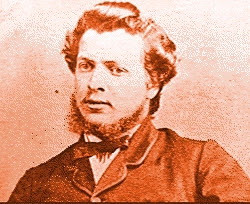
Marguerite Monet dit Bellehumeur Riel - A Metis Mother of the Battle of Batoche
"Her faith so deep and her righteousness are a beauty to be held.Ah... she is a tender creature,Always attentive to her duty.I have the privilege of knowing that her love is unfailing.When she loves, she loves through and through.Her gaze beckons on me."Louis Riel
Marguerite was born January 15th, 1861 at White Horse Plains (St. Francois Xavier) to Marie Malaterre and Jean Baptiste Monet dit Bellumeur. Marguerite's mother and father were from Metis hunting families. Marguerite spent her childhood at Fort Ellis (St. Lazare, Manitoba). Her family later moved to Montana when the Buffalo herds grew scarce.
When she was twenty years old, (1881), Marguerite was introduced to Louis Riel by her father; Louis who was quite taken with the young lady, would later ask for her hand. They were married by "custom of the country." The prairie marriage was preformed in March of 1882, at Carroll, Montana, by Father Damiani-a Jesuit from St. Peter's Mission, Montana.
Marguerite had her first child, a handsome son named Jean Riel, who had the eyes of his mother, on May 9th, 1882. Their second child, Marie Angelique, a pretty blonde little girl, was born September 17th, 1883.
Marguerite was known to be soft spoken, quiet, patient and is also said to have been petite and quite attractive. She took on the all responsibility of a plains wife: Gathering fire wood, cooking, cleaning and struggling on very little money and food. She was alone most of the time with her children, while Louis was fighting for rights of their people. Louis had a most devoted wife who worshipped him but feared the harm that could befall their family at the hands of his enemies.
In June 1884, Marguerite, Jean and Angelique accompanied Louis to Batoche, Saskatchewan, in spite of the looming conflict. She was at her husband's side during the battle of 1885 until Riel surrendered May 15th, to Middleton's scouts. Cold and hungry. Marguerite and her children hid in caves near Batoche while awaiting word from Louis. Instead Louis' brother Joseph appeared and took Marguerite and her children to live with Riel's mother in St. Boniface, MB.
Weakened by the events of Batoche and her husband's imprisonment, premature birth and death of her third child added to her grief. Marguerite's suffering continued with Louis' execution for his involvement in the Red River Resistance of 1869. When in May, 1886 she died of tuberculosis the final blow was dealt to a greatly diminished existence. She was buried beside her beloved Louis Riel in St. Boniface.
Marie Angelique died of diphtheria in 1897 just before she was to turn fourteen years old.Jean married Laura Casault, a daughter of a Québec family. Jean died July 31st, at the age of twenty-six from injuries resulting from a buggy accident. Jean and Laura had no children.
Sunday, May 10, 2009
To All you Métis Mothers Have a Very Terrific Day


Friday, May 8, 2009
Accused Métis hunter takes stand
Medicine Hat News
May 8, 2009
http://www.medicinehatnews.com/content/view/98223/27/
Accused Métis hunter takes stand
ALEX MCCUAIG
One of the three men accused of breaching hunting regulations as part of an effort to establish Métis hunting rights in southern Alberta took the stand in his own defence Thursday.
Ron Jones told the court of the hunting expedition north of Brooks in January 2008. He described it as part of a Métis action plan after the disillusionment with the aboriginal group’s Interim Harvesting Agreement with the Province of Alberta.
Jones told the court the hunt in January 2008 was to provide food for a feast with the remainder of the meat given to a single father.
The province’s lawyer, Tomas Rothwell, asked Jones if he thought his rights were being assaulted, If his rights to learn or educate his children in another language were being challenged, and if the disillusionment with the Interim Harvesting Agreement actually took away his rights.
“If you can take away one, you can take away the rest,” Jones responded.
Rothwell then produced a copy of the Edmonton Journal from Feb. 17, 2008 which documented the hunt in an article titled Launching the Western Rebellion. That article stated that he had never hunted in the area and showed a picture of him discussing his plans to notify conservation officers once he has taken an animal.
“Where you shot the antelope was actually quite close to CFB Suffield?” asked Rothwell.
“The (CFB Suffield) fence was about a half mile away,” answered Jones who worked in the area and on the base with Alberta Energy Company.
At the end of the cross-examination, Judge Ted Fisher asked Jones, “Did you have the belief, before or after, (conservation officers) would allow you to keep that animal?”
“I wouldn’t have bet on it,” responded Jones.
Jeannette Hansen, director of the Miywasin Society – an aboriginal friendship centre in Medicine Hat – told the court of her formative years in the city.She testified that her mother had denied her own Métis status due to experiences in a residential school.
Thursday, May 7, 2009
Alberta Métis go to court in their 'hunt for justice'
Alberta Métis go to court in their 'hunt for justice'
Wednesday, May 6, 2009
The Métis Nation and the Alberta Government or is it David and Goliath?
The Metis Hunt for Justice continues. In Alberta, the previous leadership (Premier Klein) was willing to try and negotiate a deal with the Alberta Metis to ensure that the implication of the Supreme Court decision was implemented. The era of government negotiated work ended with Mr. Klein's retirement.
The new era of a provincial leader that is completely controlled by one of his cabinet ministers began. Ted Morton, an American born MLA, believes in the abolishment of Aboriginal rights and the assimilation and genocide of the Metis. He has brought in policies that went even against the recommendations of MLA Report and arbitrarily drew circles on a provincial map and made a policy that marginalizes where Metis can practice their harvesting rights. The circles that were drawn on the map exclude many historic Metis communities in Alberta including Cypress Hills. In fact - his circles completely exclude anywhere in southern or western Alberta.
The historic documents completely demonstrate the significance of the Metis in the development of this province but the Alberta government would like to ignore any part of that history. Their own government records clearly demonstrate the history of the Metis and there is evidence of the contemporary Metis existing even today in those areas and that they have never extinguished their rights.
The Metis Nation of Alberta has on many occasions attempted to meet with the Alberta Government to negotiate changes to the policy to no avail. They have been forced to use the courts to protect the rights of the Metis for future generations.
The Metis Hunting Case began on Monday in the courts in Medicine Hat.
Lethbridge Herald
http://www.lethbridgeherald.com/content/view/55194/26/
Hunting court case
Written by Alex McCuaig SOUTHERN ALBERTA NEWSPAPERS
It’s expected to be one of the longest trials in Medicine Hat provincial court history with hundreds of witnesses as well as thousands of documents and, according to one constitutional law expert, it will just be the beginning.
Garry Hirsekorn, Ron Jones and Bruce Bates are facing charges of breaching provincial hunting regulations and, according to their lawyer, will likely admit as much in the trial, which began Monday.
However, what’s at issue will be far larger — who is considered Métis in this province and where can they hunt. Proceedings have been scheduled over several sessions through the end of the year.
The Alberta government under Ralph Klein fell in line with the Supreme Court’s 2003 Powley decision which recognized Métis’ right to hunt and fish for food and provided a legal test to determine exactly who can legally be recognized as Métis.
In 2004, the Interim Métis Harvesting Agreement was enacted which allowed members of the aboriginal group to hunt on Crown land and without licenses.March 2006 saw the release of a seven-page report on the issue from the MLA Committee on Métis Harvesting. The three-MLA committee identified concerns about the interim agreement from fish and game associations, First Nations as well as the Métis themselves.
The MLA report recommended a negotiated settlement firstly but, “alternatively, a unilateral approach could be instituted whereby the Alberta government would set out criteria under which it would implement a policy to govern,” the report stated.
This would include identification of Métis communities, those who practice gathering rights and the scope of Métis harvesting.
“Alberta has always been a leader in recognizing Métis culture and society, and we want to negotiate a new agreement together — one that balances the rights of the Métis people with wildlife conservation,” said Ron Stevens, then minister of justice and attorney general, in a press statement dated April 27, 2006.
“This report provides us with the guidelines to do that.”
In the same release, Pearl Calahasen, then minister of aboriginal affairs stated, “Alberta's approach has always been to negotiate agreements and to avoid litigation with aboriginal people whenever possible. The government is not taking unilateral action on Métis harvesting and will be entering into negotiations.”
In January 2007, the Court of Queen’s bench set aside the conviction of Kipp Kelley, a Métis hunter prosecuted for illegal trapping. In that decision, the judge found the Interim Harvesting Agreement “not legally enforceable.”
In July of that year, the agreement ended and was replaced with a policy that restricted harvesting rights to areas within a radius of eight recognized Métis settlements and 17 communities — none south of the Yellowhead Highway.
In response to this, Métis began in late 2007 what they call the “hunt for justice,” a series of protest hunts conducted throughout southern Alberta including the Cypress Hills, Pincher Creek and Brooks areas.
“This will be on our plate for years to come,” said Greg Clarke, director of the Centre for Constitutional Studies in a telephone interview from Edmonton.The aim of the trial is to force government to accept Métis’ constitutional rights that allow them to hunt outside the regulations.
“These are the sorts of cases that require a lot of historical research and witnesses who are professors of history. They are very unusual provincial cases for that reason . . . I would be surprised if it ended at the provincial court level.”Clarke said he is skeptical of the purpose of such trials, calling them long, drawn out, expensive and inefficient.
“If it were to be possible to see the Métis Nation of Alberta, the provincial and federal governments sit down and negotiate a framework — that already recognizes Métis rights — we wouldn’t need to use this onerous way of making public policy.”
The fact that there was an interim harvesting agreement lends credence to the Métis’ claim, he added.
“They had a framework in place with the Alberta government that the Alberta government chose to alter. It’s the government’s prerogative to do that but when they negotiated this framework with the Métis and then chose — presumably without negotiation — to rescind that policy, that is a political issue.”
Clarke went on to say that the unconstitutionality of the law may be hard for the Métis to prove but that doesn’t mean the Constitution won’t uphold the aboriginal group’s rights.
He said to expect the Métis to call on Section 35 of the Canadian Constitution as a defence for their actions.
“That’s the section the courts, over time, have begun to develop as they relate to Métis peoples in Canada,” he said.
The men’s lawyer, Jean Teillet, agreed.
“That is where the big part of the trial will come in,” she said.“We have to prove there is a historical Métis people on the land who hunted in Cypress Hills.”
The second part of their constitutional challenge will require the accused to prove Métis have continued to hunt in the Cypress Hills, said Teillet.
“In Manitoba, Saskatchewan and Ontario, a lot of what we have heard is that people have been raised to hunt in secret. I’ve heard Métis say that when they were kids they thought moose were nocturnal animals because they always hunted at night.”
Teillet said individuals in attendance at the trial will be receiving a history lesson about Métis who lived in this area.
“(There will be) thousands of historical documents — 5,000 to 10,000. And there will be community witnesses in the first two weeks talking about their practices, what their dad did and what their grandmothers told them.”
Trial begins for Métis
Medicine Hat News
http://www.medicinehatnews.com/content/view/97015/27/
Trial begins for Métis
ALEX MCCUAIG
The three men accused of breaching hunting regulations as part of the Métis “Hunt for Justice” campaign made a four-block march Monday morning down to the Medicine Hat Courthouse, surrounded by 40 supporters.
Garry Hirsekorn, Bruce Bates and Ron Jones took part in hunts near Cypress Hills, Blairmore and Suffield respectively beginning in late 2007. The aim was to establish recognized gathering rights in southern Alberta for Métis.
The province’s lawyers are contesting that the men do not meet the conditions of the Powley Decision – a Supreme Court ruling which gives a legal framework for identifying Métis.
However, the men’s lawyer Jean Teillet said, “Powley has morphed.”
She said she expects to prove not just the hunting rights for Métis throughout Alberta but a huge swath of the country stretching from the Great Lakes to the Rockies.
“The Métis have a history of hunting throughout the northwest ... the lands in question are the lands traditional hunted by the Métis of the northwest.”
Alberta Justice aboriginal law attorney Thomas G. Rothwell said any suggestion that denying these hunting rights is a rejection of Métis couldn’t be any further than the truth.
“You may be Métis but you may not be part of a rights bearing community. Individuals may say ‘what is the point of being Métis, that is what my culture is about?’ That is what we are here to decide.”
The criminal aspect of the case took less than an hour with an agreed statement of facts entered into evidence and a guilty verdict rendered pending the constitutional challenge.
The majority of the day was spent with Teillet and Rothwell going back and forth over case law on whether the province must disclose a report on the Métis.
Teillet argued the report commissioned for the province by Heather Devine be made available to the defence while Rothwell countered that the document did not have to be released under government privilege.
Judge Ted Fisher set aside his decision on that matter until Monday at the latest.
A total of 40 witnesses are expected to take the stand over at least three sessions that will run until the end of the year.
Audrey Poitras, president of the Métis Nation of Alberta, is expected to testify Tuesday.
Alberta Metis hunters battle province in court
Calgary Herald
http://www.calgaryherald.com/news/Alberta+Metis+hunters+battle+province+court/1556879/story.html
Alberta Metis hunters battle province in court
Riel descendant calls case 'pathetic'
By Darcy Henton, Edmonton Journal
May 2, 2009
Alberta's Metis people and the provincial government will square off in court in Medicine Hat on Monday for Round 1 of a historic battle that could be waged for decades over the province's interpretation of Metis hunting rights.
Six years after the Supreme Court of Canada ruled Metis have a constitutional right to fish, hunt and gather food, Alberta Metis say they have been forced to go to court to achieve full recognition of those rights.
Three Metis hunters who shot deer and antelope in southern Alberta are on trial for illegal hunting in the first of what is expected to be a series of cases involving more than 25 hunters.
The Medicine Hat case is expected to be tried intermittently over seven weeks spread over the course of the year.
Other Metis hunters who shot wild game in other parts of the province are slated to go to trial in stages after the first case is resolved.
Metis Nation of Alberta president Audrey Poitras said her 45,000 members may have to spend hundreds of thousands of dollars to assert rights Canada's top court has already ruled they have.
"There's absolutely no reason why we should even be in court," Poitras said. "We had an agreement that worked. If there needed to be changes, we had clauses in the agreement to do that."
Metis lawyer Jean Teillet said the province's insistence on prosecuting the charges in each region separately rather than bundling them into one provincewide case is a waste of court time and taxpayers' money.
"The way the Crown has this lined up, we'll be at this for the next 20 years," said Teillet, who won the landmark Powley case from Ontario in the Supreme Court of Canada in 2003.
She said she would be "very surprised" if she cannot prove there were Metis people in the Cypress Hills who have always hunted there.
"The evidence is overwhelming," said Teillet, a direct descendant of Metis leader Louis Riel. "It's like de-fending the fact the sun sets in the west. It would be funny if it wasn't so pathetic."
But Darcy Whiteside, spokesman for Alberta Sustainable Resource Development, said the department is confident it is applying the top court ruling correctly.
"The information that we have indicates that in southern Alberta, there was no Metis community that would meet the Powley requirement."
© Copyright (c) The Calgary Herald