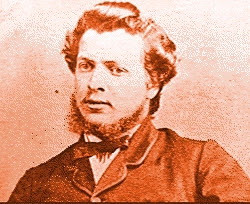
Following is a press release from the little bully who did not think that Metis Residential School survivors were important enough to bother even taking one when he had the chance....
And don't forget that had Mr. Clem Chartier and Mr. David Chartrand lost their attitude about being superior ... Phil Fontaine continued to encourage and support them to participate in the negotiations around compensation and reconciliation. It was David and Clem that refused to participate.
For those that don't know ... this has meant that many of the Metis residential school survivors have not received compensation. Some were not registered and recorded due to the issues that related with administration of the Residential Schools. The churches and organizations were compensated for First Nations students so they were tracked. Metis students were not applied for so they were often treated like the servants of the facilities and not registered.
There are some survivors who are even in the old pictures of the school but not in the registries. Some were identified as day students. Not that the day students did not get the same beatings, sexual violations and emotional and cultural abuse ... but once again because there was no voice for them throughout the discussions ... there is not acknowledgement of their abuse.
The other piece that I would tell you is that at least David sees compensation in a different light. He would like the Metis Residential School Survivors to consider having the money they would receive placed into a Manitoba Metis Federation account for the collective use of the President. Who knows maybe our Metis survivors would not mind one more act of abuse being perpetrated on them - financial abuse?
The press release is as follows:
MNC Disappointed with Métis Survivors Exclusion from Vatican Apology
http://mmf.mb.ca/index.php?option=com_content&task=view&id=591&Itemid=2
FOR IMMEDIATE RELEASE
April 29, 2009
Métis National Council Vice-president David Chartrand is welcoming the expression of regret from Pope Benedict XVI for abuses suffered by First Nation survivors of Catholic-run residential schools, but says he’s disappointed Métis and Inuit survivors were not included.
“I hope First Nations survivors can find some healing from this genuine statement of sorrow from Pope Benedict XVI,” says Chartrand. “A similar gesture of reconciliation would be of great comfort for the many Métis survivors who suffered in Catholic-run residential schools.”
Pope Benedict XVI made the statement of regret during a private audience with AFN National Chief Fontaine, First Nation elders and survivors. Vice-president Chartrand was invited by Assembly of First Nations National Chief Phil Fontaine to represent the Métis Nation during the visit to the Vatican, but was not part of the private audience.
Vice-president Chartrand, along with Inuit Tapiriit Kanatami (ITK) President Mary Simon, met with Archbishop the Most Reverend James Weisgerber, President of the Canadian Conference of Catholic Bishops, to voice their concerns over the exclusion of Métis and Inuit survivor from the Pope’s statement. Archbishop Weisgerber has offered to press the Vatican for private audiences for Métis survivors and another for Inuit.
“I am heartened by the support from Archbishop Weisgerber,” says Chartrand. “I believe he has a sincere desire to help heal the pain residential schools caused for Métis survivors and the entire Métis Nation.”
Vice-president Chartrand says the MNC will continue to work with Archbishop Wesigerber and the Canadian Conference of Catholic Bishops towards reconciliation. To that end, Chartrand and ITK President Simon offered a joint invitation for Pope Benedict XVI to visit Métis and Inuit communities in Canada.
For more information contact Frank Coyle, MMF Communications at (204) 586-8474 ext. 374 or fcoyle@mmf.mb.caThis. e-mail address is being protected from spam bots, you need JavaScript enabled to view it , Greg Taylor, MNC Communications, at (613) 296-9263 or gregt@metisnation.ca..
The MNC represents the Métis Nation in Canada at the national and international level. The Métis Nation’s homeland includes the 3 Prairie Provinces and extends into Ontario, British Columbia, the Northwest Territories and the northern United States. There are approximately 350,000 – 400,000 Métis Nation citizens in Canada, roughly a quarter of all Aboriginal peoples in the country.
Thursday, April 30, 2009
Awwhhh ... Now here is the cry from the bully ...


Métis hunting trial to begin Monday
ALEX MCCUAIG
Medicine Hat will be the venue for a trial with ramifications for Métis in Alberta and across Canada as three men are set to challenge the constitutionality of hunting charges against them.
Two of the three – Ron Jones and Bruce Bates – are facing charges of hunting out of season while a third man, Garry Hirsekorn of Medicine Hat, is accused of hunting without a licence.
All three were part of a group who took part in 20 protest hunts conducted in Alberta in late 2007 and early 2008. Their trial is part of what the Métis have dubbed, “hunt for justice.”
Though the hunts have stopped, they have only begun the expected year-long trial, which begins on Monday, that will seek to establish Métis rights in the province, according to the group’s lawyer Jean Teillet.
Speaking in a telephone interview from Vancouver, Teillet said this case will be held as a benchmark whether the government will pursue charges against others.
“Our defence is that there is a Métis right to hunt across the province,” she said.
“It is fair to say what we are trying to do is get away from the idea of invisible boundaries that demarcate parts of Alberta.”
In support of the men, Métis leaders are calling on members from across their community to join them at 4 p.m. on Sunday for a celebration feast at Medicine Hat’s Veiner Centre. They are also calling on members to attend this “historic trial.”
The proceedings begin at 9 a.m. on May 4 at Medicine Hat Provincial Court
Aboriginal People receive an Expression of Sorrow from the Pope
Firstly – I am not a residential school survivor – generations that went before me were mostly spared the experience. We did have a few cousins and more distant relatives that were affected but most of them remained loyal to their Catholic faith until their passing.
I have been to many of the activities, conferences and meetings where there were residential school survivors. To hear the atrocities that resulted from a generational genocide of a people from policies that created the struggles of some of our survivors would shake the very core of anyone’s beliefs. It has altered my own but that is not what this is about.
Firstly, I do believe that whether you are a fan of Phil Fontaine’s or not – you have to acknowledge that during his leadership he has worked diligently to try and address and have the
I do hope that some of them do find healing in the apologies that were made. I also pray that the programs and compensation that is a part of the work of the Truth and Reconciliation pieces bring further progression towards a place of peace.
Now folks I want to deal with the Métis politics of this story – because as much as the event is significant – Métis politics is always a place of its’ own expression.
Phil Fontaine invited other Aboriginal leaders to come and participate. The Inuit leader, Mary Simon went to the
In fact folks – one of the reasons that Métis and the issues related to most of them have not been addressed through the
Well my Métis friends – we did not take a residential school survivor – we took our well paid Métis contractor – Mark Leclair. I am trying to make sense of these things so what I am speculating is that due to the behaviour of the Métis bully – David Chartrand - he needed to take his main henchman and himself to get a special blessing – so he may repent for his bullying and find his way to the pearly gates some day.
Now just to be clear – when the Pope gave private audience to the Aboriginal delegation for the 30 minutes that they got – David was not invited into the private meeting. Maybe he will have to do some more repenting to find St. Peter.
Tuesday, April 28, 2009
The Assembly of Manitoba Chiefs and a Million Dollar Donation
Frank Godon provided me with a comment relating to a story that was released last week. Now as you read the story and the editorial comments - I will tell you that I am not providing an opinion related to what the First Nations in Manitoba are doing relating to their money. There is always criteria related to how gaming dollars can be used and that is generally detailed much earlier then these announcements are made.
The one thing that I would like to bring forward is the waste of tax payers money that all governments are guilty of why crying for money to deal with the social ails of society on the other hand.
In Alberta last week - we came to understand that the Alberta Government did not hesitate to spend 25 million dollars on an ad campaign to promote Alberta as a travel destination. They then put forward a picture of a beach in the UK as a means of promoting Alberta. There are beaches, majestic mountains and some of the most breath taking scenery in the world here but Britian's beaches were what was used.
In Edmonton - we have a municipal government that has continously advised the Federal and Provincial governments the ever ending need for resources to address the social problems that we have. On the other hand they are busy putting forward bids for the 2017 Expo. They are spending hundreds of thousands of dollars on making the bid and have asked the Province for millions of Alberta tax dollars to continue on their trek to try and get the bid through.
We can't seem to find the dollars to deal with homelessness, pot holes, snow removal, police services, and other matters that seem essential to many but we have the resources to chase a bid - not even knowing if we stand a snow balls chance in hell of getting the bid.
We could also go to examples of other Aboriginal leaders prioritizing things like endless civil law suits against individuals to spend their limited resources on while whining that they do not have any funding - but somewhere these decisions get made by elected individuals that do not consider the reality of the situations that affect the common grassroots people.
The link to the story is:
http://www.canada.com/Manitoba+First+Nations+donate+museum/1519462/story.html
Manitoba First Nations donate $1M to museum.
WINNIPEG- The Canadian Museum for Human Rights received a $1-million boost Tuesday from the First Nations in Manitoba.The donation was made on behalf of the Assembly of Manitoba Chiefs and the South Beach Casino and Resort.
``The First Nations stories and themes throughout the museum will share the true history and stories of our people,'' said assembly Grand Chief Ron Evans in a news release Tuesday.
``This is a great opportunity for us as First Nations to educate the citizens of the world, not only on the historical injustices that we continue to endure, but also the resilience of our people, the teachings we can offer related to peace and justice, and the great progress we have achieved in protecting and advancing our rights.''
The museum, which will be constructed in Winnipeg, is the brainchild of the late Izzy Asper, the founder of Canwest Global Communications.
The mission of the museum will be to explore human rights and commit to taking action to combat the forces of hate and oppression.
``The Canadian Museum for Human Rights has always been envisioned as a journey of hope,'' said Friends of the Canadian Museum for Human Rights campaign chair, Gail Asper.
``Indeed, the very mission of the museum is to promote respect and we believe that educating and enlightening visitors with the stories of First Nations people will help achieve that mission.''
To date, there have been more than 4,500 donations made by the private sector to the museum. All three levels of government have given a combined $160 million contribution to the project.
The total cost of the project has been pegged at $265 million. Construction is expected to be completed by February 2012.
After this piece of news was announced on April 21 an editorial/blog was released at:
Excuse Me
 Posted 4/22/2009 8:00:00 AM
Excuse me? Doubt that the chiefs had to buy their way into the museum. When it comes to human rights and a museum highlighting the struggles aboriginals will qualify as charter members, believe me.
The donation came in part from the South Beach Casino and the Grand Chief says it’ll give them a chance to tell their story.
Wait a minute, we know the story, we’re hearing it every day but unfortunately it’s been going in one ear and out the other and the chiefs themselves make that point.
The Chiefs made their donation in the morning and later in the day the same chiefs stuck a hand out demanding government financial relief from the flood waters.
The chiefs had a million bucks gained through the easy-come-easy-go method of gambling revenues and instead of handing it over to help their people in a time of need they make a deposit on membership in a human rights museum.
They just don’t get it do they? They do not know how to spend their money in a manner which will most benefit their own people. They complain about the state of their housing, they’re hard pressed to find safe drinking water, they have kids on the reserves with no future, they have people who don’t know where their next meal is coming from, and they take their casino money and give it to a museum.
And then the audacity of hearing their so-called top aboriginal leader step to the podium down there in Ottawa and complain that the onus is upon others to bail them out.
And therein lies the problem…..Indian Affairs says the government gives First nations money each and every year and it is up to them to decide how to spend it.
Believe me, the examples are everywhere, they do not know how to spend nor where to spend.
The museum donation is just one of those examples.
A million bucks won’t do much in the big picture but the optics and the cheque would provide a small dose of relief right now at a grass roots level where it is most needed.
Wonder if they bothered to ask the people of Peguis if they could have used a million bucks right now?
I’M CJOB NEWS DIRECTOR VIC GRANT
3rd Indigenous Leaders Summit of the Americas
April 24, 2009 – Indigenous Leaders celebrated a highly successful 3rd Indigenous Leaders Summit of the Americas (3rd ILSA) in Panama City, held on April 14th to 15th, 2009. Approximately 120 leaders representing Indigenous Peoples from across the Americas, including youth and women, met and issued a Declaration and Plan of Action addressing the theme “Implementing the Rights of Indigenous Peoples of the Americas for Present and Future Generations.” The co-chairs of the 3rd ILSA Summit were Native Women’s Association of Canada (NWAC) President Beverley Jacobs, Grand Chief Edward John (representing the Assembly of First Nations) and Panamanian Indigenous leader with the Kuna General Congress Héctor Huertas.
The Declaration set out the vision for the advancement of the human rights of Indigenous Peoples throughout the Americas, including self-determination; rights related to lands, territories, waters, and natural resources; the protection of traditional knowledge and intellectual property; Indigenous women’s and youth rights to participate on an equal basis and many others. The Plan of Action sets out concrete activities for realizing these rights and making a difference in the lives of Indigenous Peoples throughout the hemisphere that require strong partnerships with member states of the Organization of American States (OAS).NWAC President Beverley Jacobs noted that, “The energy of the 3rd Indigenous Leaders Summit of the Americas highlights the commitment of Indigenous Peoples to overcome the past and present challenges and to secure a future where sustainable ways of living are promoted and protected and socio-economic conditions are improved. Through this vision, Indigenous Peoples truly enjoy human rights recognized in the UN Declaration on the Rights of Indigenous Peoples as well as many other international laws and standards.”
Unfortunately, the environment at the V Summit of the Americas was not one that facilitated the critical development of partnerships with States. Rather, the delegation of Indigenous leaders experienced exclusion. Despite numerous requests by the leaders to attend the State Summit, no such invitation was extended by any government. Nor was it possible for the Indigenous Peoples to participate in the Civil Society Summit or other parallel summits leading into the V Summit because the government of Trinidad and Tobago would not accommodate the 3rd ILSA on site. The result was that the Indigenous leaders, representing millions of Indigenous Peoples from across the Americas, were not even considered “delegates” unlike members of civil society, youth, business and private sector delegates. Further, a last minute decision by the National Secretariat to increase the number of delegates from civil society from 10 to 40 individuals in the Forum with Ministers was not extended to Indigenous Peoples.
At a substantive level, this exclusionary attitude is also reflected. The V States Summit Declaration of Commitment fails to address Indigenous Peoples, despite the theme “Securing our Citizens’ Future by Promoting Human Prosperity, Energy Security and Environmental Sustainability.” Initially, there were three brief references to Indigenous Peoples in the area of health, education and the draft American Declaration on the Rights of Indigenous Peoples. In the final Declaration of Commitment, only two paragraphs refer to Indigenous Peoples, one which supports “voluntary” corporate social responsibility best practices, involving dialogues between the corporate sector, governments and Indigenous “groups”, and one that commits to the adoption of the American Declaration on the Rights of Indigenous Peoples.
Speaking about the process and the State Summit Declaration, Grand Chief Edward John voiced his disappointment: “We saw the V Summit as an opportunity to work in partnership with States of the Americas for the betterment of our people and securing a future where Indigenous Peoples are treated with respect and equality. But if our experience at the V Summit is any indication of the States’ intentions, we have a long way to go. Indeed, the V Summit represents a step backwards for recognition of Indigenous Peoples. At the IV State Summit in Mar del Plata in 2005, Indigenous Leaders were given the respect we deserve and had an opportunity to speak directly to Heads of States.”
The efforts of Indigenous Peoples to create a less discriminatory world for their communities will not be waylaid by this recent step backward. We, the Indigenous Peoples of the Americas, suffer persecution due to the fact that we are Indigenous. This persecution includes murder, displacement, and violations of our human rights by States. As pointed out by the Co-Chair (3rd ILSA) Héctor Huertas, Indigenous leader from Panama, "We have a clear vision of the path to follow and we will continue meeting with the OAS and its Member States in order to ensure that they comply with their international obligations in relation to Indigenous rights and their implementation in these American States. We will be vigilant that the VI Summit be a space to measure the true fulfillment of the States’ commitment against violence and discrimination towards Indigenous peoples.”
-30-
These co-chairs can be contacted through the following media:
Joshua Kirkey, Communications Advisor
Native Women’s Association of Canada
(613) 722-3033 ext. 231, mobile: (613) 290-5680
E-mail: jkirkey@nwac-hq.org.
Gina Cosentino, Government Relations
National Chief’s Office, Assembly of First Nations
613-241-6789 ext. 356
gcosentino@afn.ca.
Tuesday, April 14, 2009
The First International Metis Rendezvous Gathering
August 28, 2009
International Peace Garden
The festival for the weekend is free but there is a $10.00/car load fee to access the International Peace Garden. In addition to this – there is one evening event at the Berdick Performing Arts Center – Dinner and Show for $25/person. The meal will consist of buffalo roast with all the trimmings. If you only want to go to the show – the cost is $15/person. There is limited seating for this event.
We will continue throughout the next months remind you to continue to go to Métis Fest’s website at: http://www.metisfest.com/.
There is an International Committee; International Performers and all good things willing – International crowds.
Dan Gooden, Canadian Co-organizer has expressed the following:“We as Metis/michif people will finally get a North American Gathering point to connect with OUR relatives we know are out there but have not been able to meet or greet yet!“
“The Peace Garden Horticultural staff have agreed to grow, at the front entrance to the Gardens - a Metis Infinity Flag that measures 12' x 20' also one side angled off the ground about 4 to 5 feet for all 150,000 tourist to view this summer!”
Go Metis Pride Go!
This looks like a true International Gathering Point where being METIS and sharing in our proud culture and heritage is the only objective.
COME ONE - COME ALL
This festival is for the North American Metis/Michif to create Memories, Friendship, Entertainment, Excitement, and to meet family from across the Métis Homeland on both sides of the border!
Keep viewing the website www.metisfest.com for updates, the performers list is still being updated regularly.
To enter the International Peace Garden you will not need a PASSPORT, being Canadian or American, as long as you return to your Country of origin when you leave the Gardens.
There is Camping for tents, motorhomes or campers.
Rooms and Motels are available on site.
For information – bookings - tickets or any other questions contact:
Dan GoodonCanadian Co-organizer
877-437-8733
204-218-0090 cell
Clock ticking on legal definition of 'Indian'
This article is interesting to the Métis in the sense that the National definition has its’ own issues around interpretation. This is evident on how each governing member has taken a nationally accepted definition and have altered it by putting forward policies to interpret what they believe was the intent of the discussions and debate leading to the approval of the definition.
This has resulted in individuals who live in other provinces not being eligible for membership/citizenship in other governing jurisdictions. Some of those interpretations are a result of the very individuals that are being raised in the BC Courts. There are some provinces that have over many years accommodated the individuals who no longer apply for ‘Status’. This may have happened for many reasons – much of what I believe is a situation where individuals who have lost their place by racist, sexist government policies that have tried to assimilate Aboriginal people for centuries. The individuals who are of Aboriginal descent and have been displaced due to the Indian Act are attempting to maintain their – Aboriginal heritage. To fit within the definition of Aboriginal within the Canadian Constitution they need to fit within one of the three identified groups.
These issues are as old as life itself – nations of people – even though they are displaced from their lands – they don’t just stop being – because they have been bullied out of their inherent ethnic heritage. They don’t take on the ethnic being of another nation. All we need to do is look at the issues in the Middle East to see the centuries of war that resulted from individuals who do not assimilate or disappear.
There are more issues in the defining of the Métis that need resolution – but it should be the Métis that are setting the parameters. Many of the issues related to the definition would have been resolved if the work to come up with the National definition would have resulted in a National Registry that was coordinated amongst the various jurisdictions. It will be curious to see if the Government and Courts set us up to start dealing with the outstanding issues related to who is Métis – or if the courts and government get to set the parameters of what they think the membership is.
BILL CURRY
The Globe and Mail
April 13, 2009 at 8:39 PM EDT
OTTAWA — Parliament has less than a year to craft a new definition of “Indian” before Canadian native policy risks tumbling into chaos as the existing rules for determining native status are thrown out by the courts.
The clock is ticking after the B.C. Court of Appeal set the tight deadline for the minority Parliament. It's a ruling that has experts in native law scratching their heads, wondering how such a contentious issue can possibly be resolved in time.
Some lawyers say the ruling means hundreds of thousands of natives are now 12 months away from losing status entirely. Conversely, writing a new definition that complies with the Charter of Human Rights could mean a dramatic increase in the number of Canadians eligible for status.
“It's going to be a mess,” said Winnipeg lawyer Norman Boudreau, who represents natives living in Treaty 1 territory. “If you take that a step further, if you no longer have Indians, then some reserves will no longer be in existence because the reserves are set aside for Indians. So if there's no Indians any more, then the reserve itself falls by the side as well.”
Mr. Boudreau is among the many legal experts both outside and inside government currently grappling with the potential implications of this month's B.C. Court of Appeal ruling, in what is known as the McIvor case.
Mitchell Taylor, who represented the Crown in the case, disputes the interpretation of Mr. Boudreau and others. He said natives would not lose status if nothing happens by the deadline. However, new individuals would not be able to register if the definition was struck down, he said in an interview.
“That's obviously an unacceptable situation and something would need to be done,” he said. Mr. Taylor said there are several options available over the coming 12 months, including a request for a deadline extension, a new law in Parliament or a potential appeal to the Supreme Court.
A spokesman for Indian Affairs Minister Chuck Strahl said the government is considering its options.
The outcome will have a significant impact on native communities and families, who have long struggled with social divisions created as a result of the Indian Act's definition. The existing six-part definition is a complicated one, based on family ancestry as well as several side-arrangements.
An expansion of the definition would also have an impact on the public purse, as status Indians currently qualify for federal coverage of non-insured health benefits such as prescription drugs and can apply for postsecondary assistance.
In the case at hand, Sharon McIvor and her son Jacob Grismer claim that in spite of amendments made to the Indian Act in 1985 aimed at treating men and women equally, the act continues to discriminate against women. They point out that, unlike men, women cannot pass down status to their grandchildren in certain cases.
From 1868 until the Indian Act was amended in 1985, Indian women who married a non-Indian lost their status, while Indian men who married a non-Indian were able to keep their status and bestow status on their wives.
In a June of 2007 ruling, the B.C. Supreme Court agreed that the 1985 changes did not do away with all discrimination in the act. That ruling called for status to be extended to anyone who could show that somewhere in their pre-1985 ancestry a woman had lost status through marriage.
This month's B.C. Court of Appeal ruling said the lower court went too far, and that Parliament must fix only the problems with the 1985 amendment. However, Mr. Justice Harvey Groberman candidly wrote that he's not sure what MPs could have done in 1985 to fix the complicated definition.
“I am even less certain of the options that the government might choose today to make the legislation constitutional,” he wrote.
But while Judge Groberman's concerns appeared to be narrow, lawyers say they are surprised by his solution: striking down key parts of the act's definition of Indian within one year.
The 2006 census found 698,025 Canadians self-identified as “first nation,” a term used by people who are likely to have Indian status. However 1,172,790 describe themselves as aboriginal, which includes 50,485 Inuit, 389,785 Métis and first nation. An expanded definition of Indian status would likely incorporate some of the people who are Métis or aboriginal but do not currently qualify for federal services.
Statistics Canada also found that between 1996 and 2006, the aboriginal population grew by 45 per cent.